
Mr. Phung Xuan Minh, [Chairman of Saigon Ratings]
Vietnam’s Path to Self-Reliance and National Prosperity in a New Era
In the journey of national development, self-reliance, self-strengthening, and strategic autonomy have always been the foundation of Vietnam’s resilience and progress. As Vietnam moves toward its long-term vision of becoming a developed, high-income nation by 2045, the importance of building a self-reliant economy, strengthening national capacity, and revitalizing cultural values has never been more critical.
Vietnam is entering a new phase of development, one marked by both unprecedented opportunities and significant challenges. In an increasingly complex global environment shaped by economic uncertainty, geopolitical tensions, climate change, and technological disruption, the ability to remain independent, adaptable, and resilient is essential for sustainable national growth.
Self-Reliance as the Foundation of National Development
For decades, Vietnam has demonstrated remarkable resilience through its history of struggle, independence, and reconstruction. More than half a century after national reunification, the country has transformed from a war-affected economy into one of the fastest-growing economies in Asia.
This transformation was not accidental. It was built on the strength of the Vietnamese people, national unity, and the spirit of self-reliance.
Looking back at Vietnam’s development journey, especially after the economic reforms, the country has achieved impressive economic growth, improved living standards, and enhanced its international reputation. These achievements highlight the importance of internal strength as a driving force for national development.
As Vietnam approaches the 100th anniversary of its founding, the nation’s development strategy must continue to focus on maximizing internal resources while effectively integrating global opportunities.
Strategic Autonomy in a Changing Global Landscape
Strategic autonomy has become one of the most important factors for national security and economic stability.
In today’s interconnected world, no country can develop in complete isolation. However, overdependence on external markets, technologies, or supply chains can create vulnerabilities. Strategic autonomy means maintaining national independence while participating actively in the global economy.
For Vietnam, strategic autonomy includes building strong internal economic foundations, strengthening political stability, maintaining effective foreign relations, and ensuring flexible adaptation to global changes.
This approach allows Vietnam to protect its national interests while remaining open to international cooperation and economic integration.
A strong and clear national development roadmap is essential. It helps identify challenges, create solutions, and ensure that growth remains stable and sustainable.
Economic Self-Strengthening for Sustainable Growth
Economic self-strengthening is a key pillar of Vietnam’s long-term development strategy.
To build a strong and independent economy, Vietnam must focus on several critical areas, including industrial development, technological innovation, energy security, infrastructure modernization, food security, and digital transformation.
In the era of the Fourth Industrial Revolution, technology plays a central role in economic competitiveness. Vietnam has a historic opportunity to accelerate its modernization by investing in innovation, artificial intelligence, automation, and digital infrastructure.
Unlike previous industrial revolutions, where Vietnam had limited participation, the current technological transformation offers a chance to leap forward.
Investing in science, technology, and human capital will be essential to creating sustainable economic growth and increasing national competitiveness.
At the same time, infrastructure development remains a strategic priority. Modern transportation systems, energy networks, and digital infrastructure are critical for supporting economic expansion and improving regional connectivity.
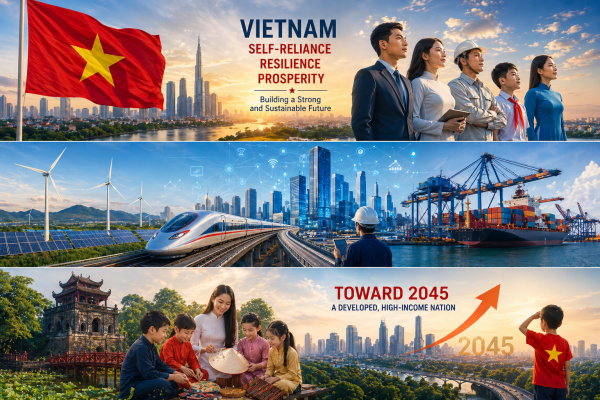
Vietnam’s Economic Challenges in the Modern Era
Despite its strong growth, Vietnam still faces many challenges.
Global climate change is affecting agriculture, water resources, and environmental sustainability. Geopolitical conflicts are increasing uncertainty in international trade. Global supply chain disruptions continue to create risks for manufacturing and exports.
As a rapidly developing economy, Vietnam must also compete with regional economies in attracting foreign investment, developing advanced industries, and improving labor productivity.
Another challenge is the transition toward a knowledge-based economy. This requires improvements in education, workforce skills, and innovation capabilities.
However, Vietnam’s historical resilience provides confidence that these challenges can be overcome.
The country has repeatedly shown its ability to adapt, recover, and grow stronger during difficult times.
Cultural Revitalization as National Soft Power
Economic growth alone is not enough for long-term national prosperity.
Culture plays a critical role in shaping a nation’s identity, values, and social stability. If the economy determines how fast a country can grow, culture determines how far it can go.
Vietnam’s cultural heritage is one of its strongest assets. Preserving and revitalizing cultural values can strengthen national unity, promote social responsibility, and build trust within society.
In the digital age, cultural challenges are becoming more visible. Social media, misinformation, changing social norms, and digital toxicity can weaken traditional values and social cohesion.
Without strong cultural foundations, economic development may lack long-term sustainability.
Cultural revitalization also contributes to national branding and international influence. Strong cultural identity enhances Vietnam’s soft power and strengthens its position in the global community.
Global Lessons in Self-Reliance and National Growth
History has shown that self-reliance can transform nations.
After World War II, Japan and Germany rebuilt their economies and became global economic powers.
South Korea transformed from a poor country into a global technology leader. Singapore became one of the world’s most successful financial centers despite limited natural resources.
Israel developed a world-leading innovation economy under difficult geopolitical conditions.
More recently, China achieved rapid economic transformation and lifted hundreds of millions out of poverty.
These examples prove that strategic planning, strong leadership, and national determination can create extraordinary development outcomes.
Vietnam can learn valuable lessons from these experiences while building its own unique development path.
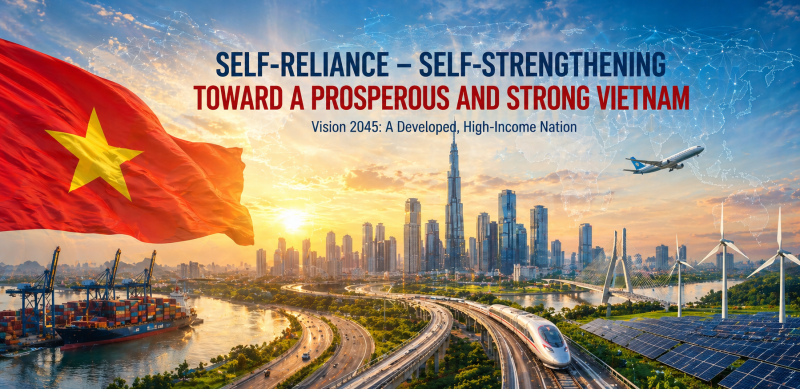
Vietnam’s Vision for 2045
Vietnam’s long-term goal is clear: to become a developed, high-income nation by 2045.
Achieving this vision will require strong economic foundations, technological advancement, cultural resilience, and strategic independence.
The path forward depends on strengthening internal resources while maintaining proactive international integration.
Vietnam must continue to invest in education, infrastructure, innovation, and institutional reforms.
At the same time, preserving cultural identity and strengthening social values will be equally important.
National prosperity is not built solely on economic growth. It requires a balanced approach that combines material development with human values, social responsibility, and long-term vision.
Conclusion: Self-Reliance as the Path to a Stronger Vietnam
Self-reliance and self-strengthening are not just political concepts; they are practical strategies for national survival and sustainable development.
In a world of constant change, Vietnam’s ability to remain independent, resilient, and innovative will determine its future success.
With a strong historical foundation, a dynamic economy, and a united people, Vietnam has every opportunity to achieve its national vision.
The journey toward 2045 will not be easy, but with strategic autonomy, economic self-strengthening, and cultural revitalization, Vietnam can build a stronger, more prosperous, and sustainable future.
The future of Vietnam depends on one fundamental principle: a nation that believes in its own strength can shape its own destiny.
Saigon Ratings [2:15 PM 28-Apr-2026]
